Physical Address
304 North Cardinal St.
Dorchester Center, MA 02124
Physical Address
304 North Cardinal St.
Dorchester Center, MA 02124

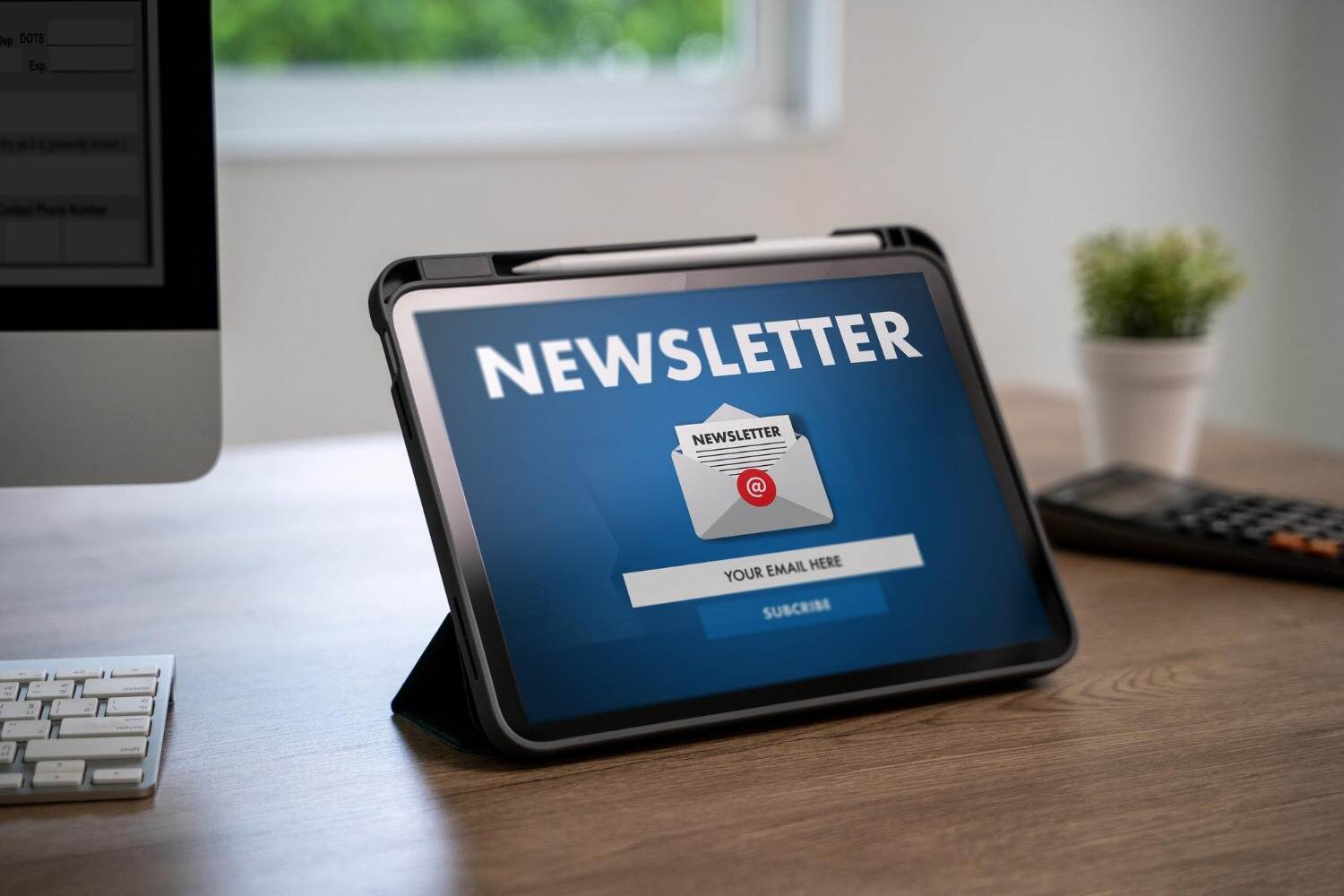
Billions of emails land in inboxes daily around the world. But we found newsletters to be one of the most powerful, trusted, and relationship-driven forms of communication in digital marketing. Whether you are a solo creator, a growing startup, or an established brand, email newsletters offer a direct, personal line to the people who matter most to your business.
But what exactly is an email newsletter? How does it differ from other marketing emails? And how do you actually start one?
This guide answers all of that and more. Along the way, you will also find newsletter design examples and practical inspiration from some of the best email newsletter examples out there.
A newsletter is a regularly sent email that shares information, news, updates, stories, tips, and insights on a specific topic, organization, or businesses with a community of subscribers who opt in. It is typically sent daily, weekly, biweekly, or monthly.
It goes beyond simple transactions and helps businesses build a reputation, develop credibility, share specialized information, and foster long-term relationships via email with their audience.
Think of a newsletter as a trusted publication that lands directly in someone’s inbox, one they look forward to receiving because it consistently informs, entertains, or educates them. That is the power of a well-executed email newsletter.
Email newsletters are not one-size-fits-all. You can adopt different formats, depending on your goals and audience.
Here are the most common 7 types of newsletters that cover the full spectrum:
These newsletters contain articles, blog posts, opinion pieces, or long-form writing for subscribers. Very common among bloggers, journalists, and independent writers. Morning Brew and Stratechery are among the best email newsletter examples in this category – concise, voice-driven, and wildly engaging.
Businesses send these newsletters to inform customers and stakeholders about any company news, product launches, upcoming events, or changes in services. These are the backbone of most business newsletter examples.
This type of Newsletter focuses on announcing new features, improvements, or changes to a product or service. These are mostly popular among SaaS companies and app developers. The best ones feel more like a friendly heads-up than a press release.
These newsletters save subscribers research time and position the sender as a trusted filter. Newsletters round up the best articles, tools, videos, or resources from around the web on a specific topic instead of creating original content and then sending it to subscribers.
These are sales-focused newsletters that highlight offers, discounts, flash sales, or seasonal promotions. While they lean more commercial, the best email newsletter examples in this format still lead with value a tip, a story, or a reason before presenting the offer.
This Newsletter teaches subscribers something new, useful, practical, or actionable. Instead of reporting news or curating links, its entire purpose is to build the reader’s knowledge or skill over time. They are popular in industries like finance, health, marketing, and technology.
James Clear’s 3-2-1 Newsletter is one of the best newsletter email examples, which delivers three ideas, two quotes, and one question every week.
It is basically used by nonprofits, associations, schools, and local organizations to update members, share event announcements, and strengthen community bonds.
The appeal of email newsletters goes far beyond convenience. Here is why thousands of businesses and creators utilize them:
Newsletter email lands directly in a subscriber’s inbox, just opposite to social media, where algorithms decide everything. You own your contact list, which means you are not at the mercy of any platform’s rules or reach restrictions.
A well-maintained newsletter list with engaged subscribers drives revenue, repeat purchases, and brand loyalty over time. The Newsletter provides average ROI estimates ranging between 10:1 and 36:1. You get real data like open rates, click rates, conversions, and unsubscribes with every send.
Showing up consistently in someone’s inbox with useful, relevant content builds familiarity and trust. Over time, subscribers begin to see you as an authority in your space, which makes them far more likely to convert when the moment is right.
Newsletters do not function in isolation. They boost your content marketing efforts, increase traffic to your website or blog, promote your social channels, and nurture leads along the funnel all at the same time.
Newsletters used to be very cost-effective compared to paid advertising. Once you’ve created your list, you may reach thousands of individuals for half the cost of social media ads.
A great newsletter is not just well-written, it is well-structured too. Whether you are drawing from existing email newsletter templates or building your design from scratch, these six elements decide which one will be opened or which one will be ignored.
1. A Compelling Subject Line – This will decide whether your email gets opened or not. A strong subject line is clear, specific, and sparks curiosity. For mobile readability, make it not more than 50 characters.
2. A Recognizable Sender Name – Subscribers should instantly know who is sending this email. So, you should use a consistent sender name, either your brand name or a person’s name, if your Newsletter has a personal voice. Trust begins with recognition.
3. Engaging Preheader Text – The preheader is the short line of text that appears in the inbox preview next to the subject line. You should use it strategically to expand your subject line’s message and give readers another reason to click open.
4. Valuable, Relevant Content – Whether it is a curated resource, an original article, a product announcement, or an industry update, your Newsletter must have real value. Prioritize quality over quantity every single time.
5. A Clear Call to Action (CTA) – Every Newsletter should have at least one clear next step for the reader. Make your CTA visible and specific.
6. A Clean, Consistent Design – Visual consistency builds brand recognition. Use your brand colors, fonts, and layout in every issue. explore popular newsletter design examples from leading brands and understand how layout, whitespace, imagery, and typography work together to create something readers actually want to scroll through.
Don’t know how to create a newsletter, no worries! Get ready to launch your own email newsletter by following these steps one by one.
Before you start, decide on your aim for creating a newsletter and your audience. Are you nurturing leads? Building a community? Driving traffic? A clear goal is to sharpen your content.
You cannot send mass newsletters from a personal Gmail or Outlook account. You need a dedicated email marketing service – a platform like TrueSend that offers list management, templates, automation, analytics, and compliance features. The right email marketing service will handle deliverability, subscriber management, and reporting so you can focus on creating great content.
Create your subscriber list before sending your first email. Then set up a subscription form on your website, provide a lead magnet, and promote your Newsletter on social media. subscribe, you should not be complicated anymore.
Most email marketing services come with a library of ready-to-use email newsletter templates. You can customize it with your branding, content, and imagery.
You should plan your editorial calendar at least a few weeks in advance so you are never scrambling for content. Always decide on a consistent structure for each issue.
Do not send any newsletter directly to your entire email list. You should check your Newsletter’s broken links, formatting, subject line, and mobile compatibility by sending it to yourself first.
Always review your newsletter performance metrics to analyze what is working and what is not. Constant improvement is the step to a successful newsletter.
Almost every industry should utilize a newsletter to enhance relationships with its customers and improve engagement.
Small Business Owners – They use newsletters to keep customers informed, promote new products, and encourage repeat purchases without spending heavily on advertising.
Content Creators and Bloggers – they can build a loyal, engaged readership that is not dependent on social media algorithms or search engine rankings.
E-commerce Brands – Send newsletters to promote seasonal sales, announce new arrivals, recover abandoned carts, and build post-purchase loyalty. Many of the best email Newsletter examples in retail come from e-commerce brands that have mastered the balance between value and promotion.
SaaS and Tech Companies – They provide feature updates, educate customers, and share tutorials via Newsletter.
Nonprofits and Community Organizations – Maintain donor relationships, share impact stories, and drive event attendance with regular newsletters.
Freelancers and Consultants – They can demonstrate expertise, share case studies, and stay top of mind with potential clients without a heavy budget.
If you have something valuable to say and a group of people who want to hear it, a newsletter is one of the smartest investments you can make.
Sending a newsletter is only half the work. Measuring its performance is what allows you to grow and improve. See what to measure:
Open Rate – Check the percentage of subscribers who opened your email. A good open rate varies by industry, but anything above 20–25% is generally considered healthy. This metric reflects how strong your subject line and sender reputation are.
Click-Through Rate (CTR) – This shows how many readers have clicked on at least one link inside the email. CTR tells about the engagement rate of your content.
Unsubscribe Rate – this shows the percentage of readers who opt out after receiving your email. A consistently rising unsubscribe rate is a signal that your content is not fulfilling subscriber expectations.
Conversion Rate – A percentage of readers who took some action, for instance, made a purchase, signed up for a webinar, or downloaded a resource. This is the most direct measure of business impact.
Bounce Rate – this is the percentage of emails that could not land in the inbox. Remove hard bounces (permanent failures) from your list immediately to protect your sender reputation.
List Growth Rate –This metric reflects how quickly your subscriber count is growing. Track this alongside unsubscribes to get a true picture of your audience trajectory.
Review these metrics after every send and use A/B testing, experimenting with different subject lines, CTAs, or send times to steadily improve performance.
These two terms are often used interchangeably, but they are not the same thing.
Email marketing-it encompasses all types of emails sent for commercial or relationship-building purposes. This includes welcome emails, transactional emails, promotional email campaigns, abandoned cart reminders, re-engagement sequences, and yes, newsletters. Running an email campaign typically means you have a defined goal, like a launch, a sale, or an event, along with a start and end point.
A newsletter is one specific type of email marketing. It is content-driven, recurring, and relationship-first rather than sales-first.
All newsletters are email marketing, but not all email marketing is a newsletter. A flash sale announcement is an email campaign. A weekly industry digest is a newsletter. Understand by the given table:
| Base | Newsletter | Email Marketing (Broader) |
| Primary Goal | Build relationship, educate, inform | Drive action, conversion, revenue |
| Frequency | Regular and scheduled | Campaign-based or triggered |
| Content Focus | Value-driven content | Offer or action-driven |
| Tone | Conversational, editorial | Persuasive, promotional |
| Subscriber Expectation | Long-term engagement | Specific transaction or response |
The fundamental purpose of an email newsletter is to maintain and deepen the relationship between a brand or creator and their audience over time.
The Newsletter’s underlying purpose is always relational, yet its specific objective is:
A newsletter accomplishes several things simultaneously. It keeps your brand top of mind between purchases or visits and positions you as a trusted authority in your industry. So it gives your audience a reason to stay connected even when they are not actively in the market for what you sell.
At TrueSend, you can find excellent, ready-to-use company newsletter templates to give your Newsletter a premium and professional touch in minutes. The real power of a newsletter is not just the open rate or the click-through rate, but the invisible, compounding trust it builds email by email, week by week.
How often should I send a newsletter?
You can send a newsletter weekly, bi-weekly, or monthly, but your consistency matters most. Beginners can start with the monthly newsletter. It gives you time to produce quality content without burning out.
Do I need a large email list to start a newsletter?
No, there are many businesses that started newsletters with fewer than 100 subscribers. So, you should just focus on quality- subscribers, instead of list size. A small, engaged list will always give you better results than an inactive one.
How long should a newsletter be?
Your good newsletter should generally take about 4–5 minutes to read. For editorial-style content, around 400–900 words works well. If you’re sharing curated links, keeping it shorter is better. Never stuff extra content just to meet a word count. Value the reader’s time.
What is the difference between a newsletter and a promotional email?
The difference between a newsletter and a promotional is that a newsletter is primarily content-driven and relationship-focused, and is delivered on a regular schedule. whereas a promotional email used to be sales-driven, typically sent as part of a targeted email campaign around a launch, sale, or seasonal moment.
How do I know if my newsletter is working?
When you get a stable open rate, unsubscribe rate under 0.5% per send, clicks, and replies, congratulations, your newsletter is working. If not? Then revisit your readers and use different formats.