Physical Address
304 North Cardinal St.
Dorchester Center, MA 02124
Physical Address
304 North Cardinal St.
Dorchester Center, MA 02124


Do you find yourself confused when it comes to picking an SMTP port? Don’t worry! Getting yourself familiar with different SMTP ports available will help you make the right choice. You must focus on the functionality of these ports, as it’s crucial to secure your SMTP connections.
A rapid and effortless way to start delivering emails is via SMTP (short for Simple Mail Transfer Protocol). All you need to do is provide vital information, such as the server name, username, password, and port. Sending emails to your clients or customers on your behalf is what the SMTP server does. That certainly works well!
However, what should you consider adding and why, when it comes to filling out an SMTP port field?
Through this comprehensive blog, we will understand the difference between SMTP port numbers – 25, 465, and 587. In addition, we will discuss what these ports are, how they work, and which port you must use.
SMTP (an acronym for Simple Mail Transfer Protocol) is the standard protocol that businesses and organisations use to deliver emails over the Internet. It’s a method in which emails are transmitted between the mail server and the mail clients. It also includes all the servers in between. This ensures that when an email is sent, it arrives at its destination on the recipient’s mail server.
In SMTP, messages in the form of data are dispatched, and the traffic is routed to ports. Once this message travels through any given port, email security protocols are used for message validation. They either deliver the message straight to the recipient’s inbox, discard it, or make it land in the spam folder.
SMTPS is considered safer compared to SMTP. In those days when the Internet was launched, an email address’s URL used to begin with www.http. However, spammers and spoofers found this an easy target, as they began to capture protected information. SMTPS, which is equivalent to SMTP and TLS (transport layer security), implements the encryption method and authentication to safeguard SMTP.
To verify the traffic’s origin, TLS makes use of a digital signature, and it verifies the source where the email traffic is coming from. The data is transmitted if the origin in the signature aligns with the actual origin. SMTP port 587 is the default one.
While the right SMTP port generally depends on your specific use case and circumstances, it is highly recommended that you use port 587 and only use 2525 if you have trouble sending with 587. Port 587 is the preferred port by ISPs and ESPs because:
The right SMTP port is usually conditional upon your use case and circumstances. However, using port 587 is highly recommended. This is specifically true when you’re facing a problem with 587. Many ESPs (email service providers) and ISPs (internet service providers) prefer using port 587 due to the following reasons:

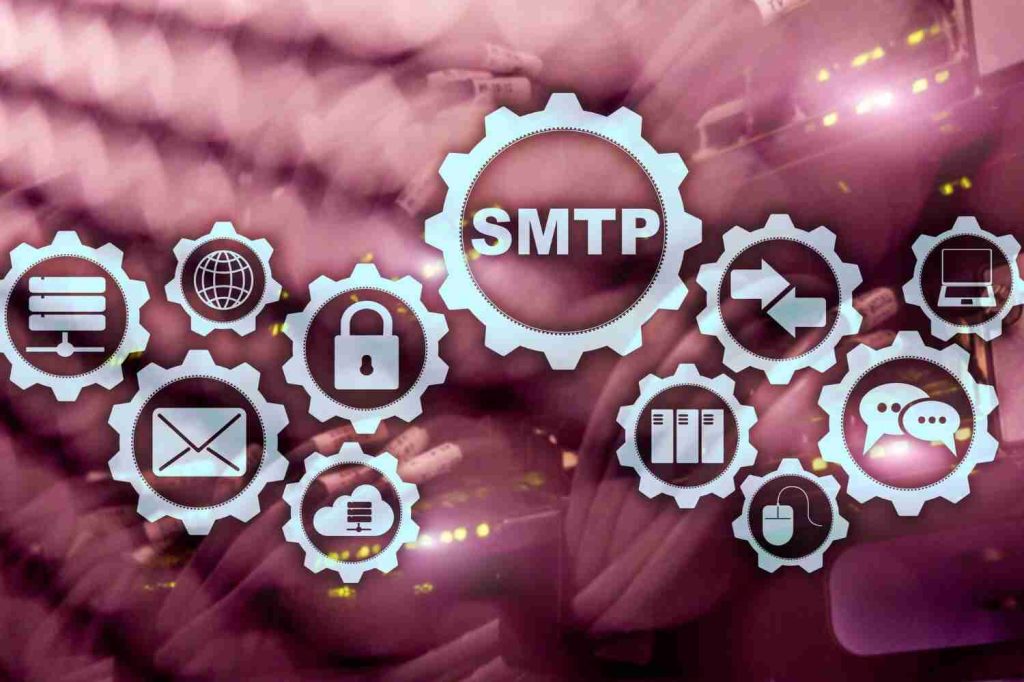
We will now delve into the 3 most common types of SMTP ports and their uses.
The oldest port in the list is none other than SMTP port 25. This port made it successfully in the authentic SMTP proposal of 1982 (around 4 decades ago). Typically used for delivering an email via SMTP, although it’s used for other purposes at times, like the network service remote management.
Allowing communication between the servers (sending and receiving), port 25 is the default SMTP port that helps send an email message to a recipient.
As a preventative measure, numerous internet service providers (ISPs) and email service providers (ESPs) have already begun to intercept incoming connections on SMTP port 25. This is due to the widespread use of spam and other types of malicious and email-based attacks. You must consider using a different port to send an email with if you want to make sure your emails are not restricted.
Used for SMTPS (Simple Mail Transfer Protocol Secure), SMTP port 465 was a port used for email submissions. By encoding the mail content, this port offered safe communication between the client and server. The reason to use the past tense here is that SMTPS was marked obsolete after the inception of STARTTLS – a command for changing a connection to secure.
To support older mail clients that deployed SMTPS earlier, there are some email servers that may still be relying on port 465 usage. However, it’s not recommended because it does not adhere to RFC. You must avoid using this port for sending emails with SMTP, unless you feel the need for maintaining legacy email applications across a big organisation.
Known as the “submission” port, email clients specifically use SMTP port 587 for sending messages to an SMTP server. It’s a highly secure SMTP port. In fact, it’s what ESPs and ISPs prefer for submitting messages. This is because it integrates seamlessly with email authentication to ensure that only authenticated senders can deliver emails via the server. This makes the port a safe and secure way for sending emails. In addition, it helps prevent spamming and other email attack types.
Using port 587 always for sending emails with SMTP is highly recommended.

When you use the right port, it not only ensures delivery but also manages your sender reputation. However, you need to look out for some ports that have an ill reputation. Using them that keep your email out of the inbox will be the last thing you want to consider.
Picking the wrong SMTP could be detrimental to your inbox placement and harm sender reputation as well.
Various ports have different preventative measures. Therefore, you keep your email communications secure by picking the right port.
While some SMTP ports send encoded messages, others allow unrestricted traffic. The security standards of your business may determine the ports you use. Or it may be through the messages’ sensitive content you deliver.
| SMTP Port | Security | Use Case |
| 25 | Port 25 is usually devoid of authentication and encryption. | Regarded as a standard port for SMTP transmission between mail servers, ISPs and cloud hosting providers intercept port 25 for outgoing mail. This helps prevent spam and fraudulent message circulation. |
| 465 | Port 465 always uses SSL/TLS. | This port, at times, is used for protected email submission on legacy systems. However, some providers still rely on its use. |
| 587 | Port 587 supports authentication. It uses SSL/TLS if the client issues a STARTTLS command. | This port is extensively supported for safe message submission from email clients to mail servers. |
SMTP ports are a core component of email infrastructure. While the domain of ports has advanced over the years, from the genuine port 25 to the contemporary, safe port 587, you must understand the purpose of and the essential role these SMTP ports play. Moreover, you must understand the encryption method and relevant use case, as it’s a must for anyone looking to build or manage email systems.
You lay the groundwork for trusted, safe, and deliverable email communication by picking the right port and integrating it with proper encryption and authentication.
At TrueSend, we understand the vital role these ports play for your business, and help you make a practical decision when choosing the right SMTP port for email delivery.
1. How do Ports 25, 465, and 587 differ from one another?
While SMTP port 25 relays server traffic, ports 465 and 587 manage safe transmission of client emails.
2. Should Port 25 still be used for sending standard user emails?
Not at all! Internet Service Providers (ISPs) intercept port 25 owing to widespread misuse of spam distribution.
3. Why is Port 587 a preferred choice for email delivery?
SMTP port 587 enforces TLS encryption. This ensures secure and reliable email delivery across diverse modern networks.
4. Under what circumstances should Port 465 be selected over Port 587?
Choose SMTP port 465 only when older systems or specific network settings require implicit SSL/TLS encryption.
5. Which SMTP port assures you of the highest deliverability?
SMTP port 587 offers the highest deliverability. This is because the majority of ISPs and cloud providers unblock the port.