Physical Address
304 North Cardinal St.
Dorchester Center, MA 02124
Physical Address
304 North Cardinal St.
Dorchester Center, MA 02124

Your newsletter landed in inboxes but not in people’s minds? Don’t worry! Many people receive tons of marketing emails through email campaigns daily, but hardly any of them are read. Let me tell you that the brands that cut through the noise don’t just send emails, but they send experiences.
This guide breaks down the best email newsletter examples, what makes each one work, and how you can replicate those results with TrueSend’s email automation tools and newsletter email templates. You do not need a design degree to use the tool.
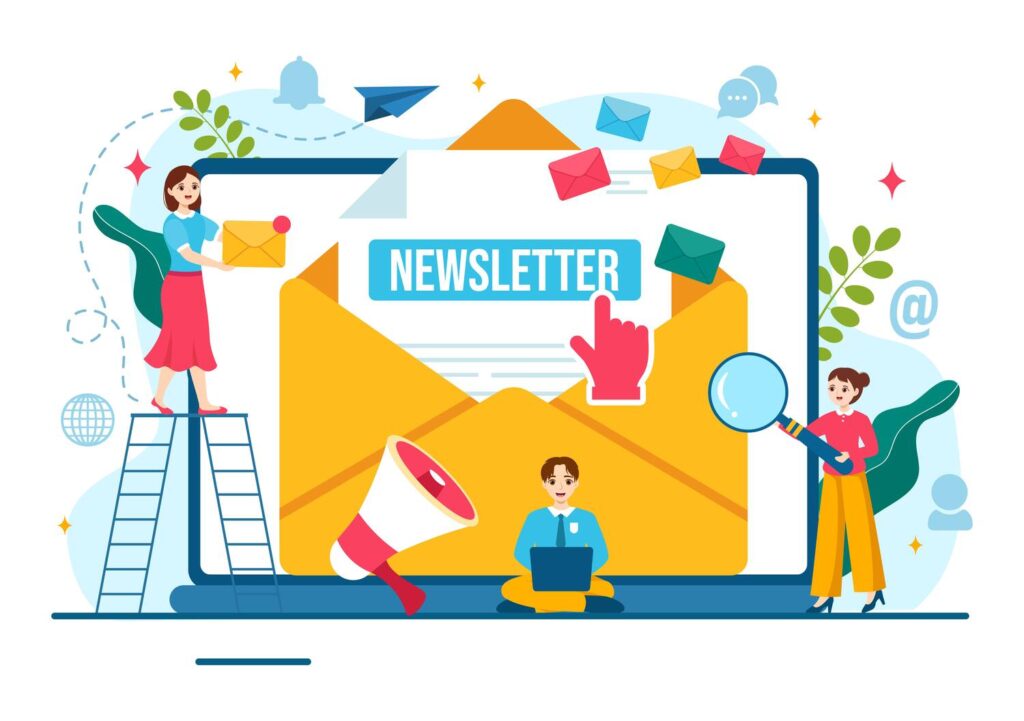
An email newsletter is a regularly sent email that delivers valuable content, such as updates, tips, curated stories, or promotions, directly to a subscriber’s inbox. It matters because a email newsletter examples for businesses builds an ongoing relationship between your brand and your audience.
High ROI: On average, for every ₹1 invested in email campaigns, newsletters can generate ₹36 to ₹42 in returns, which provides a high ROI.
Direct Audience Reach: Your newsletters land directly in your customers’ inboxes, and it doesn’t depend on algorithms like any social media. So, it builds a personal connection with the audience.
Builds Trust & Credibility: If you send regular, useful content that helps your brand stand out and builds authority in a crowded market, you win.
Keeps Your Brand Top of Mind: When you consistently send newsletter emails, it reminds customers about your products, offers, and updates, encouraging repeat business.
Targeted Marketing: You can personalize your newsletters for different segments and can easily increase engagement and conversion.
Cost-Effective Customer Nurturing: Newsletters help convert leads into loyal customers without heavy advertising costs.
Encourages Engagement: An email newsletter is one of the best ways to engage your audience with your brand, which boosts long-term loyalty.
By regularly sending newsletters in email campaign, businesses can drive repeat purchases and strengthen customer relationships without the high costs of traditional advertising. In essence, newsletters don’t just inform, they convert readers into regular customers.
Before diving into newsletter examples, you need to know what separates forgettable newsletters from ones people actually look forward to. Take tips and make your email marketing newsletters advanced.
Read out how the top 11 email newsletter examples look that people actually open and read.
Morning Brew has made everyday boring financial news interesting, and now people genuinely enjoy reading it. Do you know what their secret is? So let me disclose it. They have used a conversational tone, clever headlines, and bite-sized sections that respect the reader’s time. They have mixed market news with humor in every edition so that readers enjoy getting updated.
What to learn: You should inject personality into your brand voice. Even your B2B newsletters don’t have to be boring.
Glossier’s newsletter reads more like a beauty magazine than a promotional email. It provides additional educational content like tips, interviews, myth-busters, and only nudges toward products subtly. This is the main reason that readers trust it.
What to learn: Your newsletter email should focus on giving value first, not pushing a sale. You can add extra information and knowledge that helps the reader anyway.
Airbnb offers people the opportunity to rent out their homes or book unique places to stay around the world. And so they use stunning destination photography paired with short storytelling in their newsletter email. It excites readers to travel the world. Email newsletter templates used to be clean, mobile-optimized, and every image earned its place.
What to learn: Visuals can support your message and your goal, so make sure you use them sincerely. One strong image beats five mediocre ones in email campaign.
Miro is one of the popular online collaborative whiteboard platforms. Miro’s product emails don’t feel like boring changelogs. They show the value of a new feature as practical guides by telling 3 things:
The emails are useful and informative, not pushy or overly promotional. They aim to teach the user instead of trying to sell every time.
What to learn: write company news in a newsletter around what it means for your reader, not just what’s new for you.
As we know, Patagonia is an outdoor clothing and gear company that is popularly known for its sustainable practices and environmental activism; it also shows this through its newsletter email.
Patagonia’s newsletter email underlines its environmental mission and combines its marketing messages with its activism content. And you know what? It actually worked. Readers feel like they’re part of something bigger, a positive act after reading the newsletter email.
What to learn: You should use your newsletter to support your brand values, not just push products. People connect more with the ideology than with just shopping.
HubSpot is a well-known platform that helps businesses manage marketing, sales, and customer relationships. That’s the reason they also apply the strategy in their newsletter.
HubSpot’s marketing newsletter is perfect for learning how to write a B2B email newsletter for businesses. Each issue delivers a practical tip or mini-guide that engages the reader with the knowledge alone.
What to learn: your newsletter should teach something useful in every send. If a subscriber learns from you, they will surely buy from you once.
The recommendation emails of Amazon feel like they were made just for you because they were. They use purchase history and browse data and then surface products for each subscriber that win them.
What to learn: You can do the same with TrueSend’s email automation and segmentation tools. It helps you to personalize content based on user behavior.
If you do not know let me tell you that Charity: Water is basically a nonprofit organization that brings clean and safe drinking water to communities in developing countries. They send donors updates showing exactly where their money went, attaching photos, stories, and data from the field to their newsletter emails. As a result, they connect their audience in an emotional way and build trust just through their email.
What to learn: your email should also show real results, not just intentions, because real proof builds loyalty.
Quartz is a digital news outlet that provides global business, economy, and technology news. Their newsletter email technique includes charts, bullet points, and emojis to make global economic news easy to digest in under five minutes. They use a consistent structure so that the user knows what to expect.
What to learn: When you use a consistent structure, it reduces mental effort. When readers know what’s coming, they actually open your email.
Typeform occasionally embeds mini-polls and interactive elements directly in its emails, turning passive readers into active participants. Engagement shoots up when readers can do something.
What to steal: Ask your audience a question. Even a simple “Reply and tell us” drives engagement and signals to inbox providers that your emails are wanted.
Apple keeps its email newsletter clear and to the point. Their newsletter contains just one hero image, one headline, and a single CTA. They use very little text and imagery and avoid clutter and confusion. Their goal is simple, which is to grab the audience’s attention quickly and make the news easy to digest.
What to learn: Here we learn that less is often more and enhances brand reputation. Avoid using everything in one email. One message and one CTA are more than enough sometimes.
Stuck on what to send? Here are email newsletter ideas that work for different industries:
1. Behind the scenes – It helps you to introduce your hard work to the audience. You should show how your product is made, or a day in your team’s life.
2. Customer spotlight – you can feature a subscriber story or case study to bring your customer to the center.
3. Curated reading list – you can share 3–5 resources that your audience will love.
4. Quick tip of the week – include one actionable insight or tip in short under 200 words.
5. Industry news recap – you can summarize what happened in your space, what impact it had, and why it is important.
6. Ask a question – you can ask one question at the end to invite replies. It will boost engagement and inbox placement.
These tips will help you make your newsletter email more engaging, connecting, and add quality. With an email marketing provider, you can enjoy ready-to-use newsletter email templates that save your time and effort.
Do you want to create a newsletter that leaves an impact, but don’t have any idea? Get ready to build a newsletter that your subscribers actually open. Here’s how TrueSend makes it simple:
TrueSend’s template library includes professionally designed company email templates for every industry and use case, such as editorial, promotional, digest-style, and more.
Send the right content to the right people. TrueSend’s segmentation tools help you split your list by behavior, location, purchase history, or engagement level.
With TrueSend’s email automation, you can schedule welcome sequences, re-engagement emails, and drip campaigns without any manual work. So your newsletters go out consistently every time.
You can easily track, monitor open rates, click rates, conversions, A/B test subject lines, and CTAs. Then you can send a better email than the last using this data.
The best email newsletter examples aren’t successful by accident. They share a commitment to consistency, genuine value, and understanding their audience. Whether you’re just starting out or looking to improve an existing email campaign, these strategies will guide you to build newsletters that people actually want to receive.
TrueSend gives you the newsletter email templates, email automation, and analytics tools to put all of this into practice without a full marketing team.
What should be the length of an email newsletter?
There is no rule for newsletter email length, but we have noticed most high-performing newsletters fall between 200 and 500 words. You can keep the curated, digest, and educational newsletter longer.
How often should I send an email newsletter?
Most B2B businesses send newsletter emails weekly or bi-weekly, while e-commerce businesses often send 2–3 times per week. Frequency is not as important as consistency. Stick to a schedule so subscribers know when they will receive your email.
What’s the difference between a newsletter and a promotional email?
The main difference between the two is that a promotional email focuses on a specific offer, product launch, or sale, whereas a newsletter is broader. It includes ongoing value through content, updates, tips, or stories.
How are a newsletter and a promotional email different?
Basically, a promotional email adds any specific offer, sale, or product launch details, whereas a newsletter is more than that. It includes updates, tips, or stories, as well as informative, knowledge-based content.
How do I grow my email newsletter list?
You can offer a clear incentive to subscribe to a free guide, a discount, or access to exclusive content. Besides this, you can use sign-up forms across your website, social channels, and checkout pages. TrueSend’s landing page tools make it easy to capture and manage new subscribers.
Can I reuse blog content in my newsletter?
Absolutely, it’s one of the smartest email newsletter ideas available. This drives website traffic while giving subscribers a reason to stay subscribed.
What email newsletter metrics should I track?
You can track your newsletter performance through TrueSend’s analytics dashboard. The ideal metric should be: