Physical Address
304 North Cardinal St.
Dorchester Center, MA 02124
Physical Address
304 North Cardinal St.
Dorchester Center, MA 02124


Email marketing is one of the most trusted and powerful channels of digital communication for businesses or marketers. It breaks the wall between the audience and businesses and connects them directly. With an email blast, a business can save time and send one email to a large number of subscribers in just one click. Isn’t it relaxing? However, in an email campaign, you have to apply email blasts carefully. There are so many things to know before you practice email blasts in email marketing.
Success is not just about sending an email blast, but it also depends on targeting, timing, engagement, and most importantly, email deliverability.
In this guide, we break down “what is an email blast?” why you need an email blast, how email blast marketing works step by step in real business environments, and how to build a system that improves performance using segmentation, strategy, and proper execution.
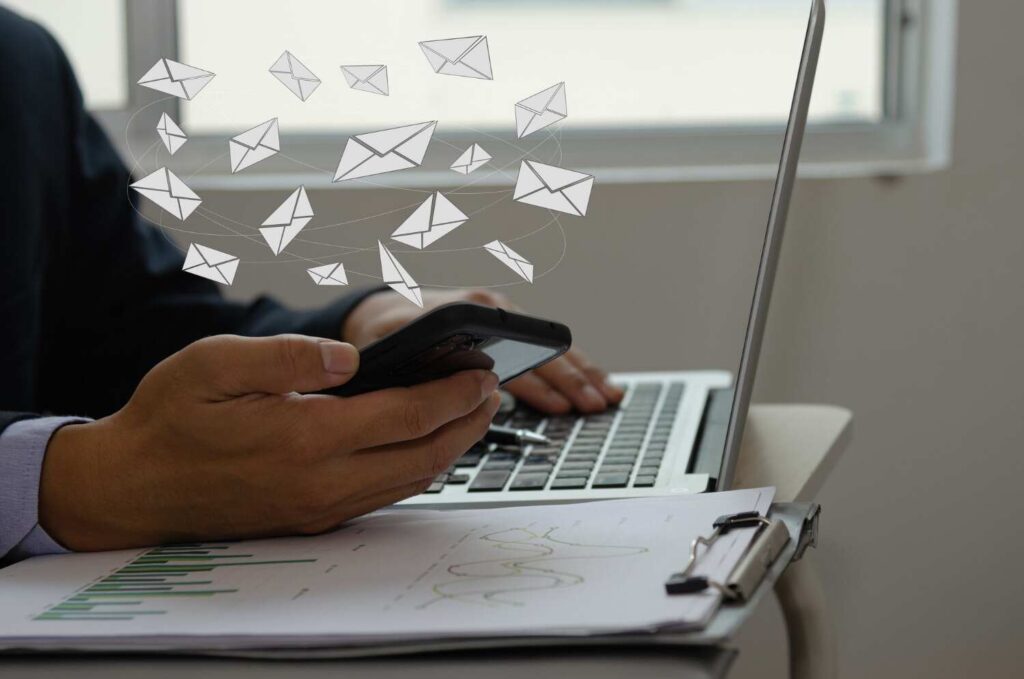
Let’s start with the most searched question, which is what an email blast is. So let me explain. When a marketer sends a single email to a large group of subscribers at the same time, instantly, not one on one, it is called an email blast. Businesses use it to share announcements, promotions, updates, or product launches.
When users ask what an email blast is, the simple explanation is bulk email communication without deep personalization at the message level. But modern email blast marketing is no longer about random mass sending. It is about sending relevant communication to a defined audience with the help of data and segmentation. A strong email marketing strategy ensures every email blast is aligned with user interest, timing, and behavior instead of being a generic message.
The difference between old-style blasting and modern email blast marketing is strategy. Without it, an email blast becomes noise only, and when you do it in a planned way, it becomes a performance-driven communication tool.
If you are new to email marketing and want to start an email blast, then you are at the right topic here. Follow the steps to start an email blast. As we all read already, when to use and when to avoid, it’s time to start it smartly.
To send an email blast, you first need to pick one reliable email service provider (ESP). You can trust TrueSend. ESP provides tools that manage bulk email sending, tracking, and deliverability in one place. You easily manage email blast marketing professionally instead of sending emails manually.
The next step is to prepare your audience list. A proper email list segmentation setup improves results. You can segment your list based on:
With good segmentation, you can improve open rates and get better email deliverability in every email campaign.
It is very important to remove invalid emails, old inactive users, and duplicate contacts before sending any email blast. This step protects your sender reputation and improves email deliverability. A clean list is a key part of any email marketing strategy, and if you do not know how to do so, then read this blog, “9 Best Email List Cleaning Hacks for Better Engagement,” for targeted emailing.
It’s time to write your email to send as a blast. If you are confused about how to create a good email blast? Then let me tell you what to include – a clear subject line, a simple message, one strong CTA (call-to-action), and a mobile-friendly design.
Make sure you avoid spammy language because it can harm email deliverability and shorten the results in email blast marketing.
Now create an email campaign inside the platform. You will choose your audience list (or segment), add email content, set sender name and email, and schedule or send immediately. A structured email campaign ensures your email blast is not random but part of a planned email marketing strategy.
Last check-up is always necessary for everything, so why not an email blast?
Check if your email is ready for mobile view, analyze broken links, spam score, and subject line preview before final click. Improves email deliverability and prevents errors in your email campaign smartly.
Now you are ready to send an email blast. Either send it immediately, or you can also schedule for the best time. You must know that timing matters in email blast marketing because engagement affects email deliverability.
Monitoring your email is the crucial step to understanding your email blast performance. Check email analytics like open rate, click-through rate, bounce rate, unsubscribes, etc. These metrics help in analyzing our email marketing strategy and guide future email campaign planning.
When you use an email blast campaign guide, you take a step forward towards improving consistency across all email campaign activities and minimizing errors. When you follow the steps clearly and make an analytical plan, you get better email deliverability by avoiding spam triggers and improving engagement signals.
Marketers wish for long-term success, and that is why they use email blasts to cover a large number of people, which is fine until they make such common errors. So, if you want this email blast mistakes to avoid , it is essential to know them first.
1. Taking audience segmentation lightly – Ignoring email list segmentation reduces relevance for the public and engagement quality.
2. Weak strategy foundation – Many marketers do not work on making a proper email marketing strategy, and start a campaign that leads to inconsistent email blast marketing results.
3. No attention on deliverability – Poor email deliverability causes emails to land in spam folders, and all your efforts get wasted.
4. Over-emailing users – Never do that mistake. A brand’s reputation is everything in marketing. Sending too many emails reduces trust and increases the unsubscribe rate.
5. Lack of campaign structure – A weak email campaign only brings unclear messaging and poor conversions. Most email campaigns get dumb for this reason.
Thus, these are the mistakes that you need to avoid to improve performance and long-term email health.
Here are the proven email blast best practices that you should apply to get improved results. Take a look:
1. Focus on relevance over volume. Make sure you send fewer but targeted emails because it improves engagement.
2. Maintain clean email lists with regular cleaning. It improves email deliverability. You can use TrueSend List Segmentation to simplify the process.
3. Use personalization. Let me tell you that even in email blast marketing, personalization boosts results.
4. Check your email subject lines from time to time. A/B testing improves open rates in every email campaign.
5. Track open rate, CTR, and bounce rate to check real-time performance.
These practices strengthen your email marketing strategy and improve long-term results.
In 2026, modern email blast marketing has upgraded its strategy. Now it is working softly with tools that automate and optimize communication simply. These common tools support:
Using the right tools saves your time and improves the execution of every email campaign. Enjoy better email deliverability with advanced email tools.
Do not get stuck with this thought, which most people think that a successful email blast is sending large volumes of emails. Let me tell you that it is more than that. Most importantly, it is about sending the right message to the right audience at the right time, which is commonly a core part of email marketing. You need to combine a strong email marketing strategy, proper email list segmentation, a structured email campaign, and optimized email deliverability to get the improved result.
With this email blast campaign guide, you can build a scalable email communication that is also stable. Modern email blast marketing works best only when it is strategic and performance-driven; instead, you jump to random bulk sending.
What is an email blast?
An email blast is a way of handling a large audience by sending a single message at once to all the subscribers for marketing or informational purposes instead of sending one by one.
What is another name for an email blast?
An email blast is also known as bulk email, mass email, and email broadcast. Although these terms are frequently used similarly in everyday speech, they can be separated by their unique functions.
How to make an email blast?
To make an email blast, you need to follow a step-by-step process:
What are common email blast mistakes to avoid?
Common email blast mistakes to avoid include :
Does an email blast work?
Email blasts actually work when you are executing them sincerely. For example, you cannot send an unedited email to a complete list. You should focus on email personalization, strong deliverability, and a clear list.