Drop unwanted emails to the suppression list
Keep your email list healthy and exclude ‘do not contact’ email addresses or domains from your email campaign. Email suppression list management protects your sender reputation and deliverability smartly.
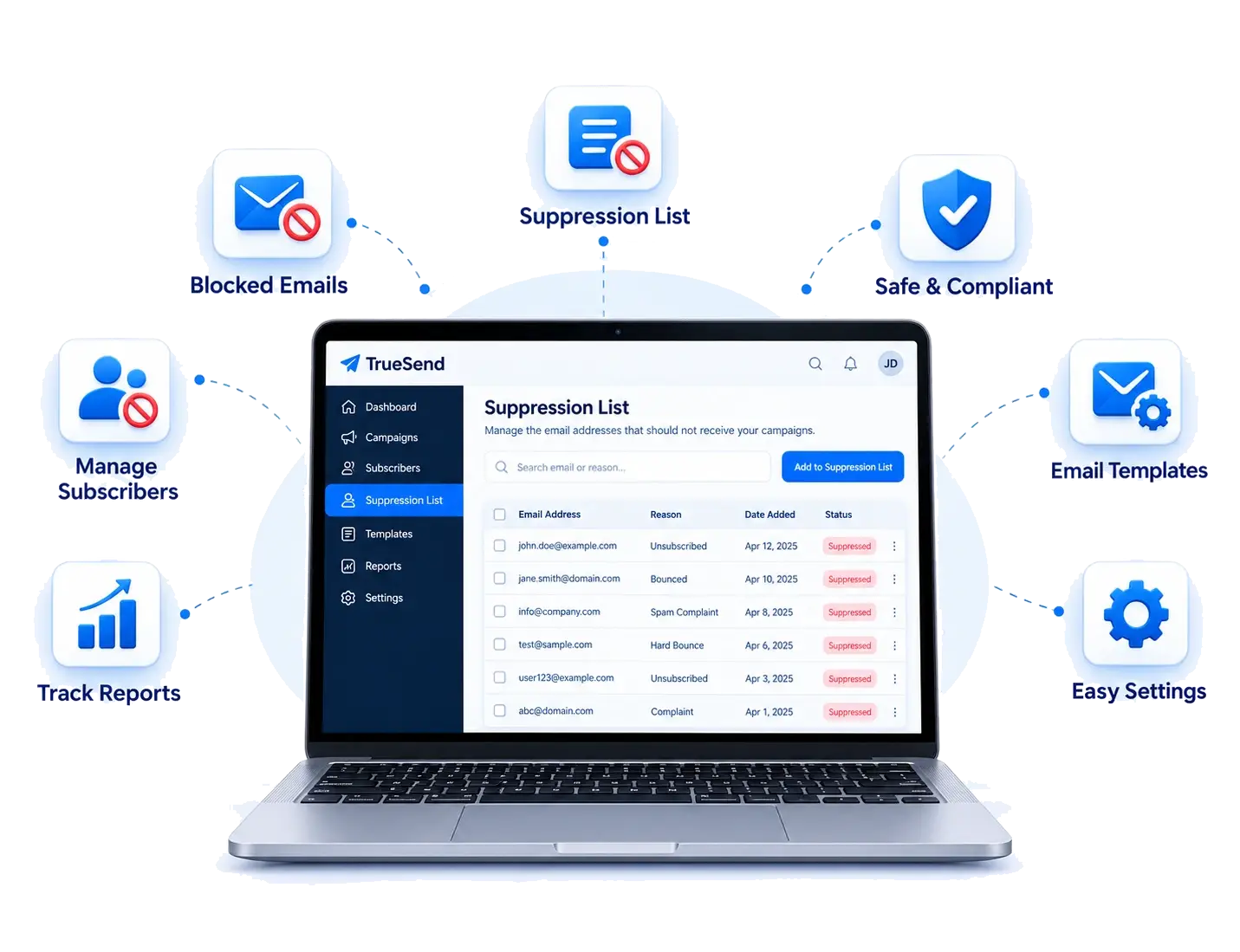
Keep your email list healthy and exclude ‘do not contact’ email addresses or domains from your email campaign. Email suppression list management protects your sender reputation and deliverability smartly.
Every dead address, angry unsubscriber, or spam complaint can quietly tank your sender reputation if you are still sending emails to them. A solid suppression list fixes that and keeps your sends clean, compliant, and actually worth opening.
Great targeting means nothing if your list is still full of people who'll never open it. This is where suppression list management actually pays off.
You send your emails without worrying about hard bounces, unsubscribes or soft bounces, as these automatically get added to the email suppression list.
You can also add an address or domain manually to block them and manage email suppression list. Truesend provides the freedom to edit your suppression list by yourself.
Running campaigns across multiple domains or brands? One suppression list software setup covers them all. Nobody slips through the cracks on a second domain.
Do you need to hand your email list to a client, an auditor, or your own records? Export it in a couple of clicks. You don't have to dig through dashboards or beg support for a CSV.
They sound similar, but they're not the same game. Suppression permanently blocks an address from every future send. Whereas exclusion just skips them for one specific campaign. It can still be reachable for the next.
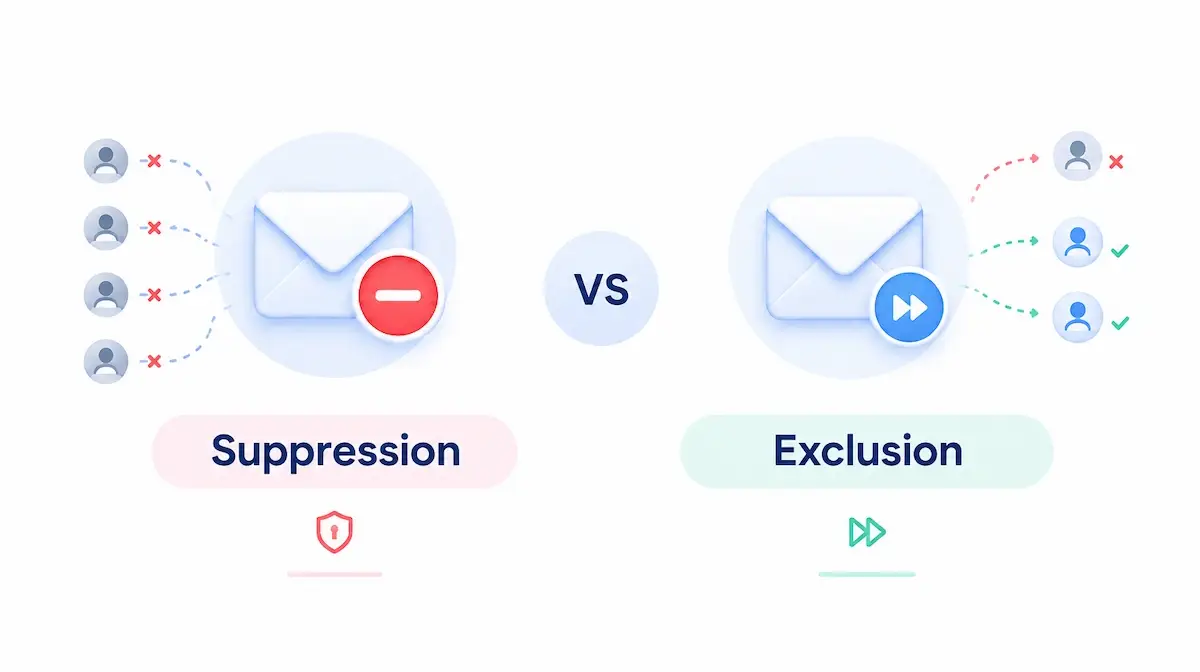
Three culprits quietly damage most lists - catch these, and you're most of the way there.
An address that hard bounces once will keep bouncing. When you send to it again, it will only drag your reputation down further.
Someone opted out for a reason. Respect their consent. It's the baseline of good email blocklist management.
Every spam complaint quietly tells inbox providers to trust you less. So you can't continue sending to those. Protect your email campaign.
Want to know more?
We all talk about list segmentation, a healthy email list for effective email campaigns, but we all know there are some users who are not interested in our services for any reason. Maybe they are not the target market, but we still send them emails. This results in unsubscriptions, spam complaints or hard or soft bounces.
We all should know, before starting email marketing, that email deliverability and sender image are everything when you are a business and want to become a brand. Make sure you are not disturbing those who don't want to receive from you. We select email addresses that are interested and separately prepare a list based on behavior, personality or needs, analyzing multiple factors, but there are also some email addresses that are ones you don't need to email. If you again and again send emails to those email addresses, they will damage your market value. These email addresses are included in the suppression list.
People change jobs, abandon inboxes and forget they ever signed up. On average, about 23% of any email list goes stale every single year. So if your suppression list software isn't actively catching that decay, you're not losing a little reach, but you're actively hurting yourself every time you hit send to an address that's already unsubscribed from you.
And the complaint math is brutal. Gmail and Yahoo draw the line at 0.3%, which means 3 complaints out of every 1,000 emails. Cross that limit regularly, and email providers may start filtering your entire domain, not just one campaign. Teams that protect their email reputation don’t wait for that to happen. They treat anything above 0.1% as a warning sign and investigate email campaigns quickly. That’s why a manual cleanup once a month is no longer enough if you are into professional email marketing.
Email Deliverability and compliance sound like boring words, but you must know that they hit where it actually hurts - your heavy budget. When you send emails to a non-target audience, you are just wasting your money. Along with that, CAN-SPAM violations can cost tens of thousands of dollars per email, not per email campaign. But flip it around, and good suppression list management pays for itself.
Senders who manage their lists properly consistently experience stronger delivery and inbox placement than those who don't. This is because ISPs are just watching for who's trustworthy. If you manage your email suppression list well, you will not just avoid risk but also quietly outperform everyone who isn't bothering.
Take a look before you start using a suppression list to avoid mistakes that can hurt your planning.
Let me tell you that not all suppression works the same way. Beyond individual addresses, some teams block entire domains known for chronic bounce or complaint patterns - a sharper, more surgical form of email blocklist management.
It's not something to reach for lightly, but used right. It stops repeat damage before it spreads to the rest of your sending reputation.
At the end of the day, this isn't glamorous work. But it's the main difference between campaigns that land and campaigns that slowly, invisibly stop working.
Everything you need to know about TrueSend's Email Suppression List